

Artificial intelligence is moving from being a tool that answers questions to becoming an operational layer capable of querying data, proposing decisions and executing actions under permissions. For operations, the change that matters is not “using a chatbot” — it is redesigning how work flows between people, data and systems.
Executive thesis
Part I
The new management infrastructure
1. What is artificial intelligence, really?
“Artificial intelligence” is a broad term. It includes prediction, computer vision, optimisation, speech recognition and generative models. In today's business conversation, most of the attention concentrates on large language models, or LLMs.
An LLM is a model trained on large volumes of data to estimate what content should follow from a given context. That capability, scaled and fine-tuned, lets it summarise, classify, draft, analyse, code and work from instructions. It does not know a company by default, and it does not guarantee that every answer is true.
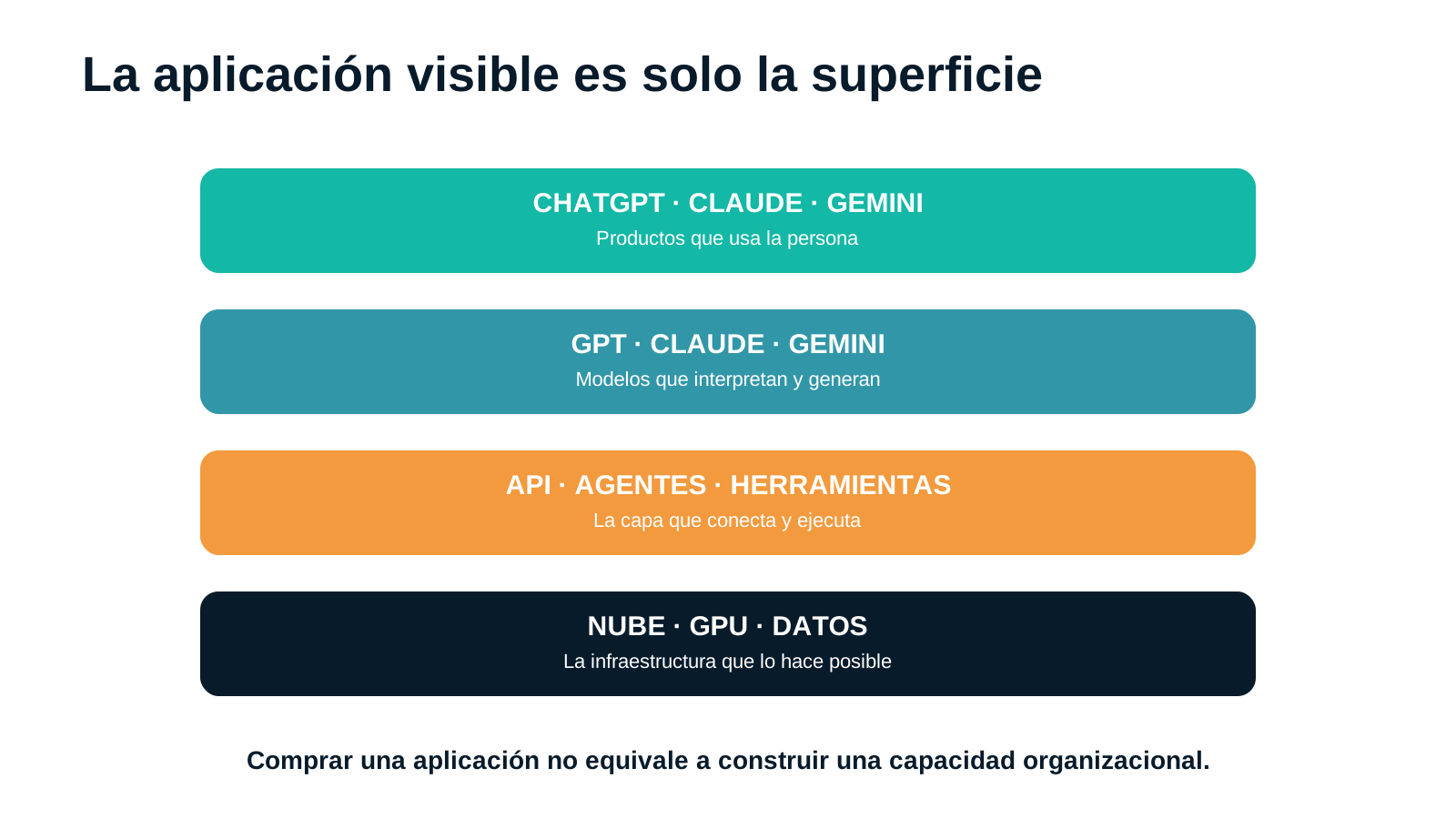
The most important managerial distinction is this: OpenAI and Anthropic are companies; ChatGPT and Claude are products; GPT and Claude are model families. A company can use a model through a visible application, or embed it inside its own software through an API.
2. The map of actors
The market is not organised around a single winner. Each player controls a different part of the chain.
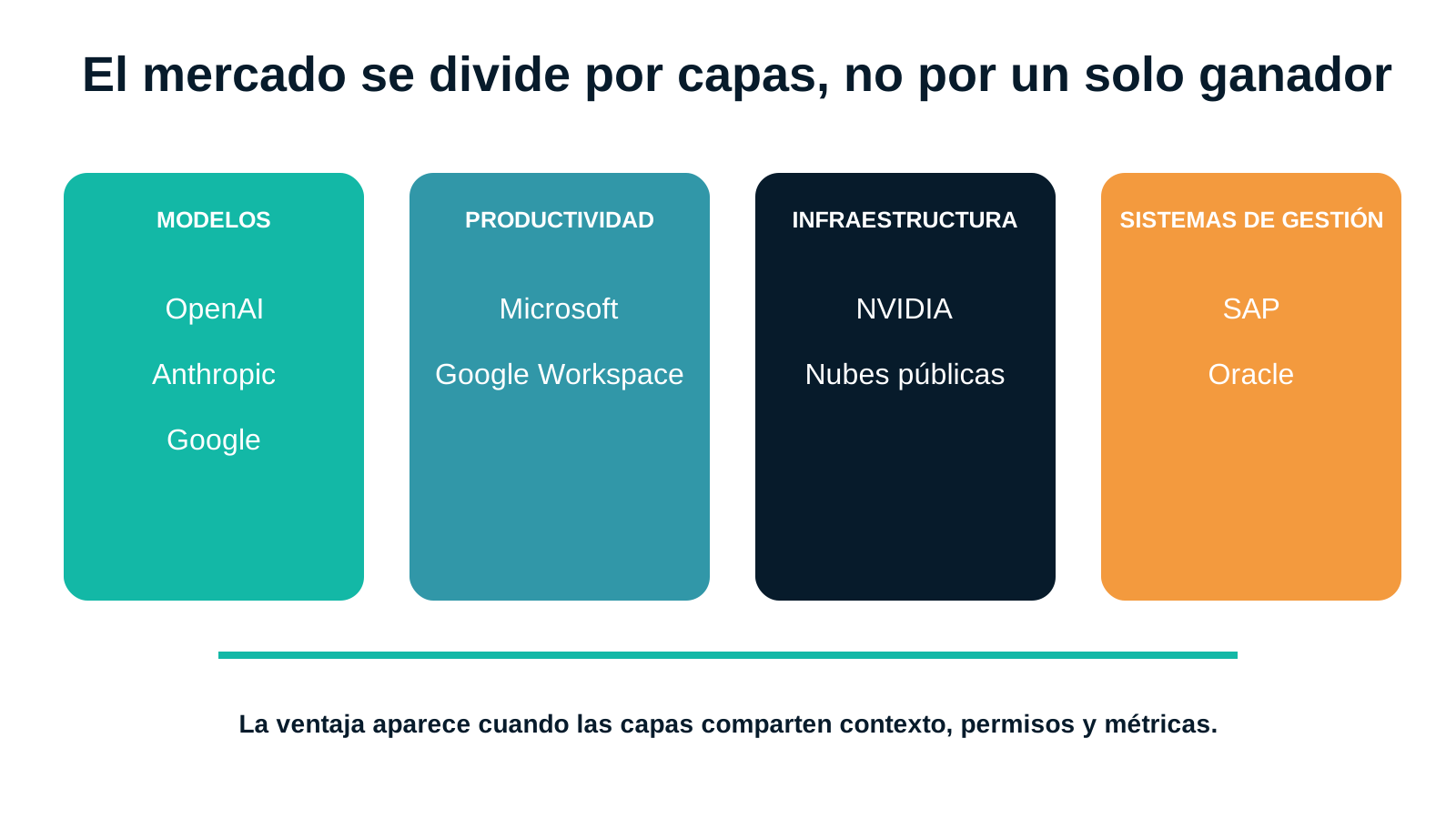
OpenAI and Anthropic compete on models, assistants and developer platforms. Google combines Gemini models, Workspace, data and an enterprise agent platform. Microsoft distributes AI through Microsoft 365, Azure, Windows and its agent tooling. NVIDIA supplies a critical share of the compute and deployment software. SAP and Oracle are embedding agents directly into ERP, finance, supply chain, manufacturing and HR.
The conclusion is not to pick a winning brand. It is to understand which layer each vendor controls, what data it receives, what permissions it gets, and how hard it would be to replace.
Part II
From chatbot to agentic software
3. What is an API?
An API defines how one system requests a capability from another, and how it receives the response. It is not a new technology, but it becomes central because it lets AI models be introduced into existing processes without building the model from scratch.
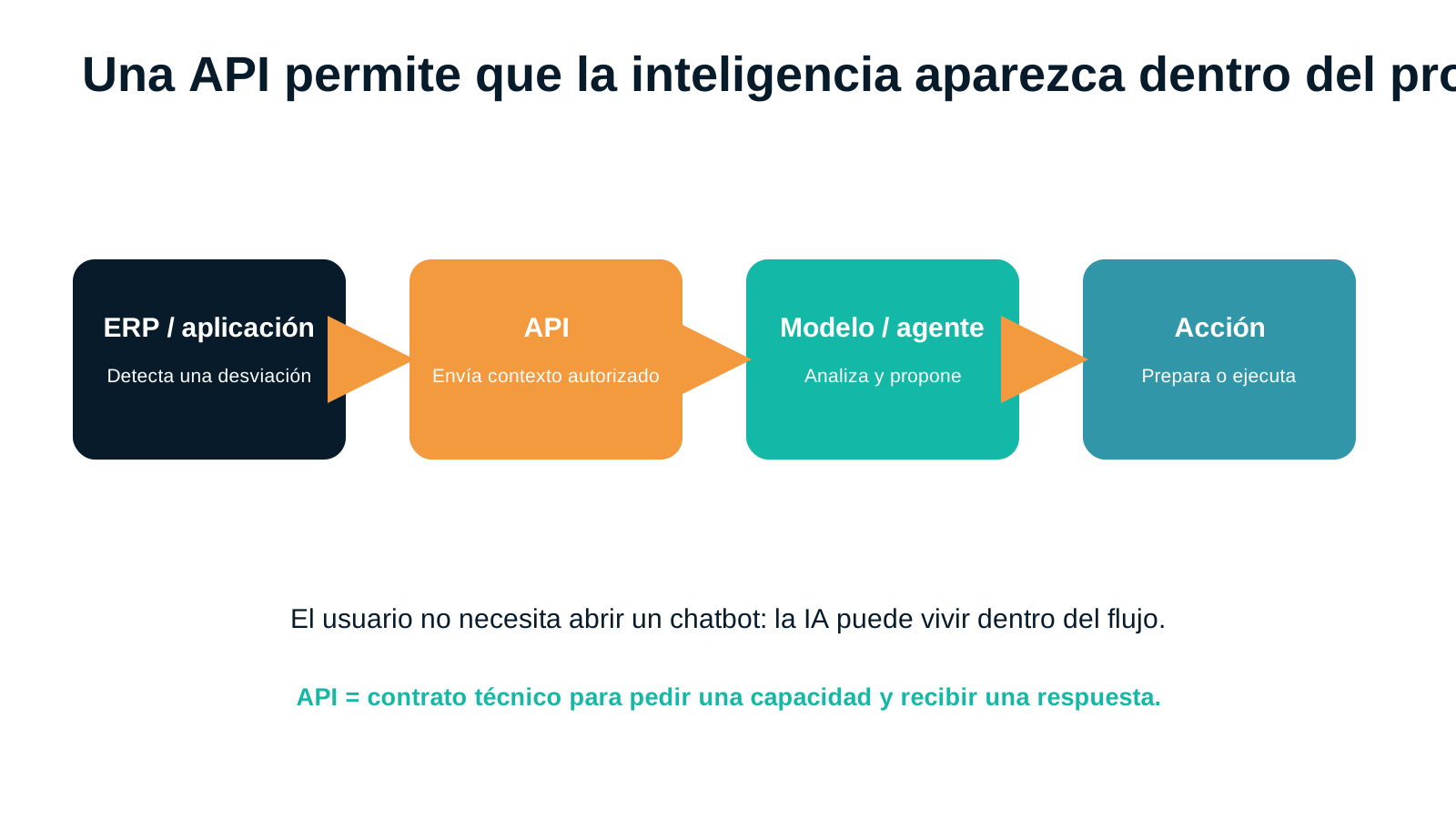
Example: a procurement system detects a consumption deviation. Over the API it sends the agent authorised data about inventory, open orders, demand and constraints. The agent explains hypotheses, recommends actions and, if permitted, drafts a purchase order or requests approval. The intelligence appears inside the workflow — not necessarily inside a chat window.
4. What is an agent?
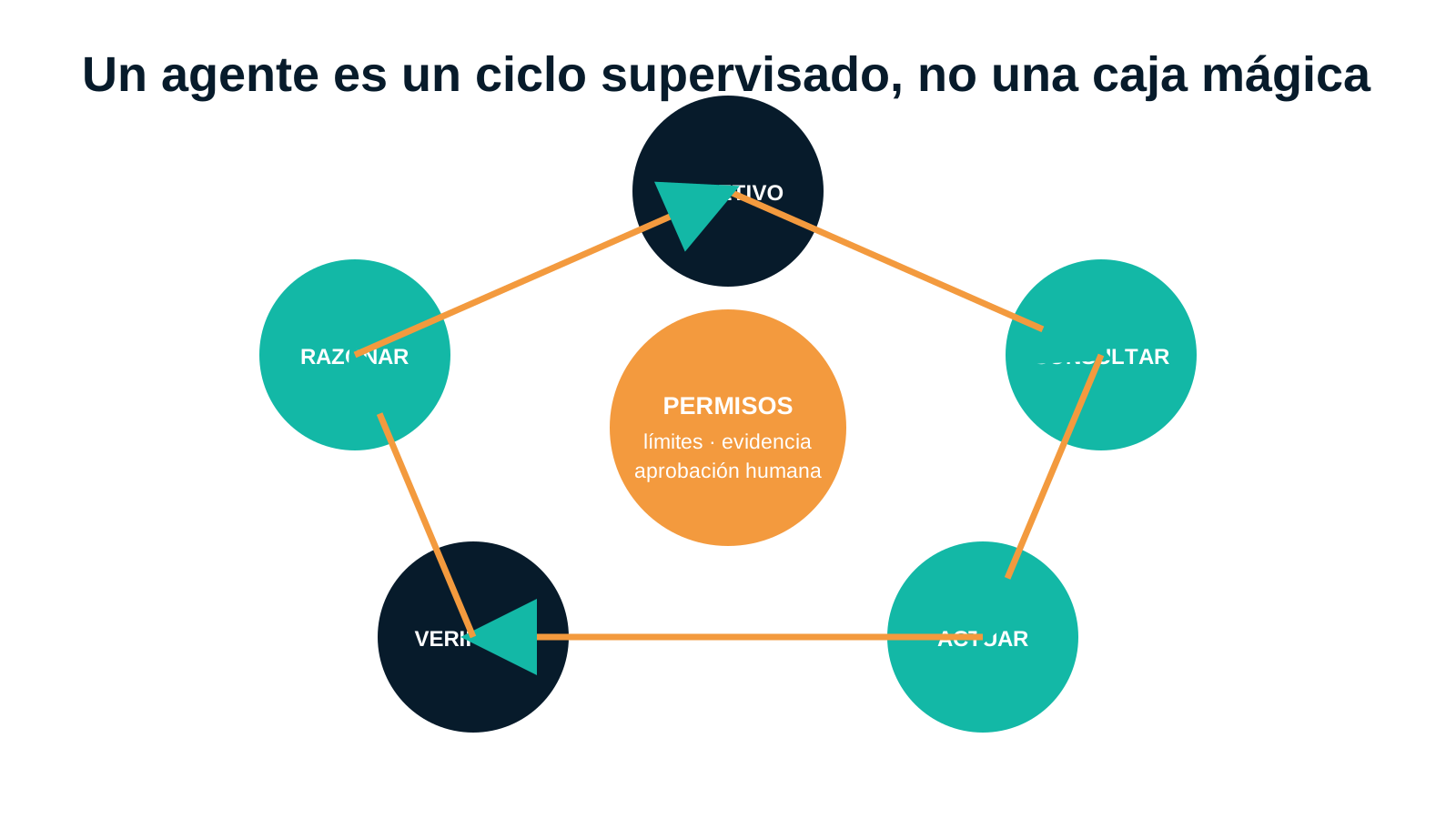
Traditional software waits for a person to navigate screens and execute steps. An agent receives a goal, consults context, chooses tools, executes a sequence and verifies the result. This does not remove the need for processes; it forces you to describe them better, and to define exceptions, permissions and evidence.
Three levels are worth distinguishing:
- Assistant: answers and generates content.
- Copilot: analyses context and prepares work for a person.
- Agent: can use tools and execute actions within defined limits.
Calling any chatbot an “agent” is imprecise marketing. The real test is whether the system can pursue a goal, use tools, hold state, verify results, and operate under an auditable identity and set of permissions.
Part III
What's changing at the major platforms
5. NVIDIA, Microsoft, Google, SAP and Oracle
NVIDIA is positioning itself as the infrastructure of the “AI factories”: accelerated compute, networking, software and tooling to run models and agents at scale. The managerial point is not to buy GPUs because it's fashionable, but to evaluate cost, latency, privacy, dependency and utilisation.
Microsoft and Windows are turning the workstation into a surface for agents. Word, Excel, Outlook, Teams and the desktop can move from being tools operated only by people to environments where agents consult, prepare and execute work under an identity and policies.
Google integrates Gemini models, Workspace, data, security and developer tooling into a platform for building and governing enterprise agents. Its strength is combining information, cloud and multimodal models.
SAP presents Joule Agents and Joule Assistants with role and process context. In operations, the stated scope covers planning, manufacturing, logistics, assets and procurement. The risk is assuming that the ERP's context equals the whole operational reality.
Oracle is embedding agents inside Fusion Cloud and its finance, supply chain, manufacturing and maintenance processes. The direction is clear: the ERP will not just store transactions — it will also suggest and execute work within defined controls.
Part IV
The impact on operations
6. How operational work changes
The first gains will show up in information-intensive work: variance analysis, planning, procurement, inventory, quality, maintenance, logistics and coordination. Autonomy will not arrive evenly.
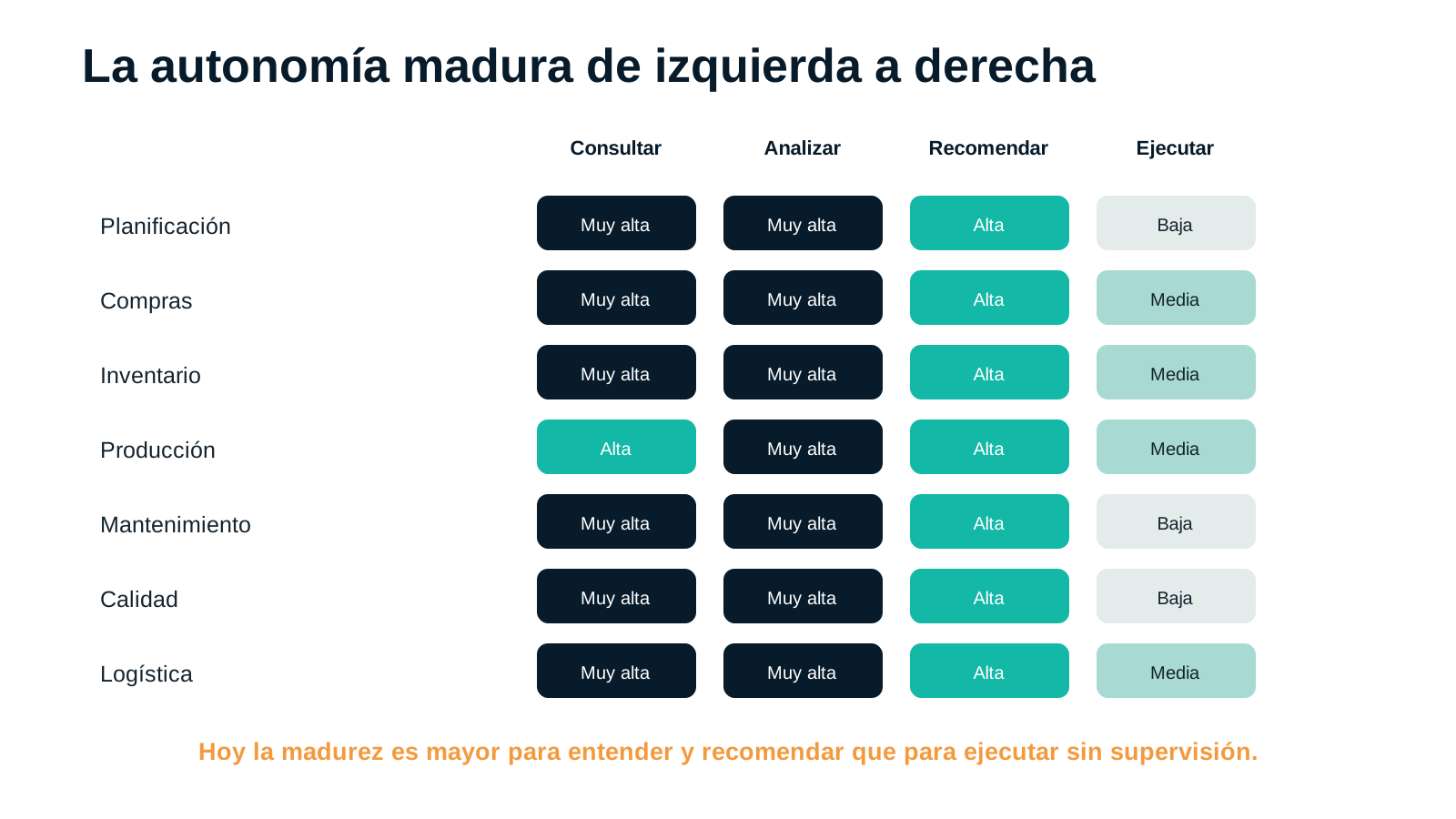
Information and administrative cycles will compress first. Automation of repeatable, reversible, low-risk decisions will grow after that. Irreversible decisions, contractual commitments, safety, layoffs, product release, quality exceptions and actions with material impact require explicit accountability.
7. The director's new job
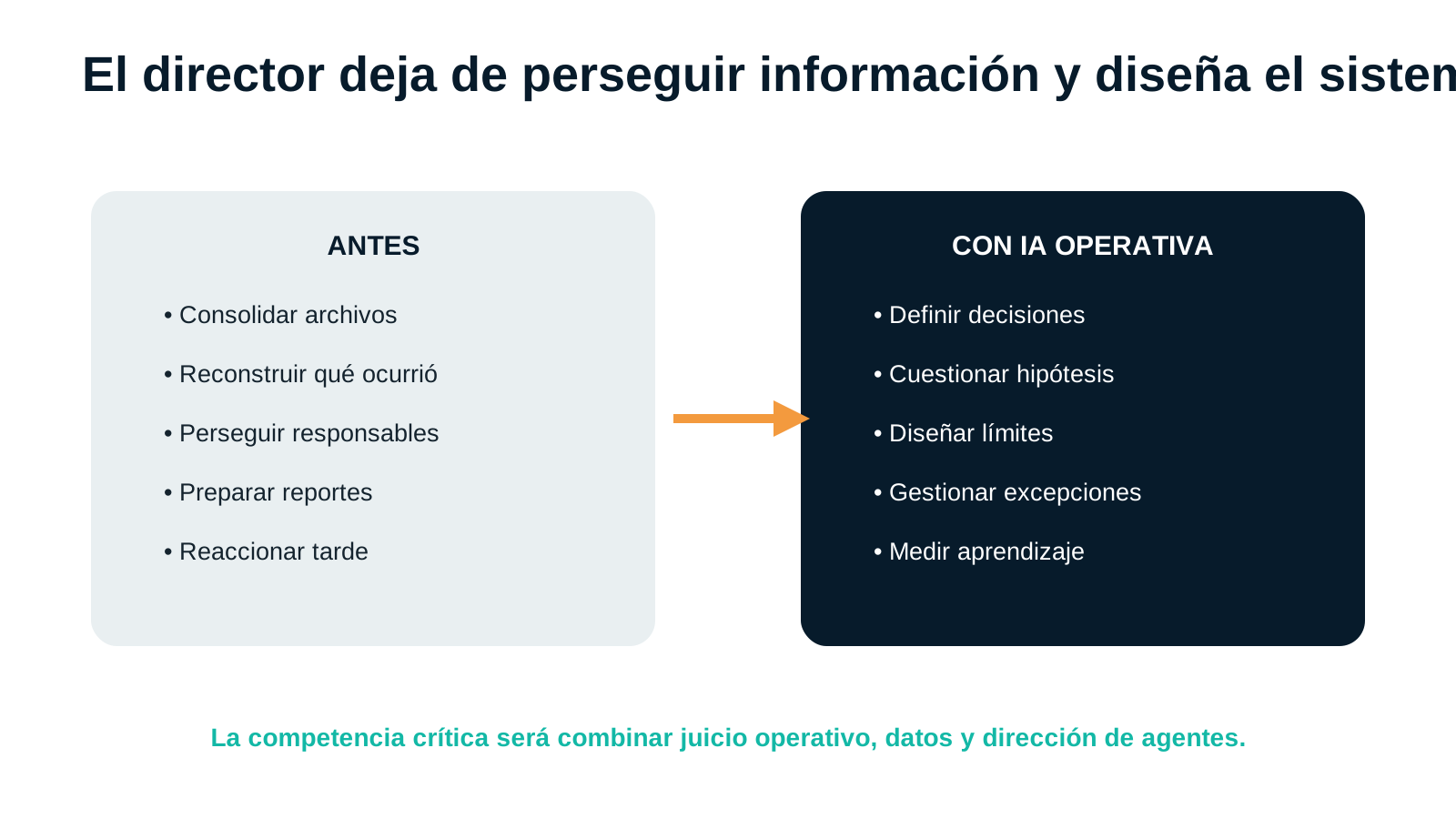
The director doesn't need to become a data scientist. They do need to learn to frame problems, demand evidence, decide levels of autonomy, understand data dependencies and measure value. Directing agents will be an extension of directing people and processes, with one difference: software scales execution — and it also scales errors.
Part V
Responsible adoption
8. A 90-day path
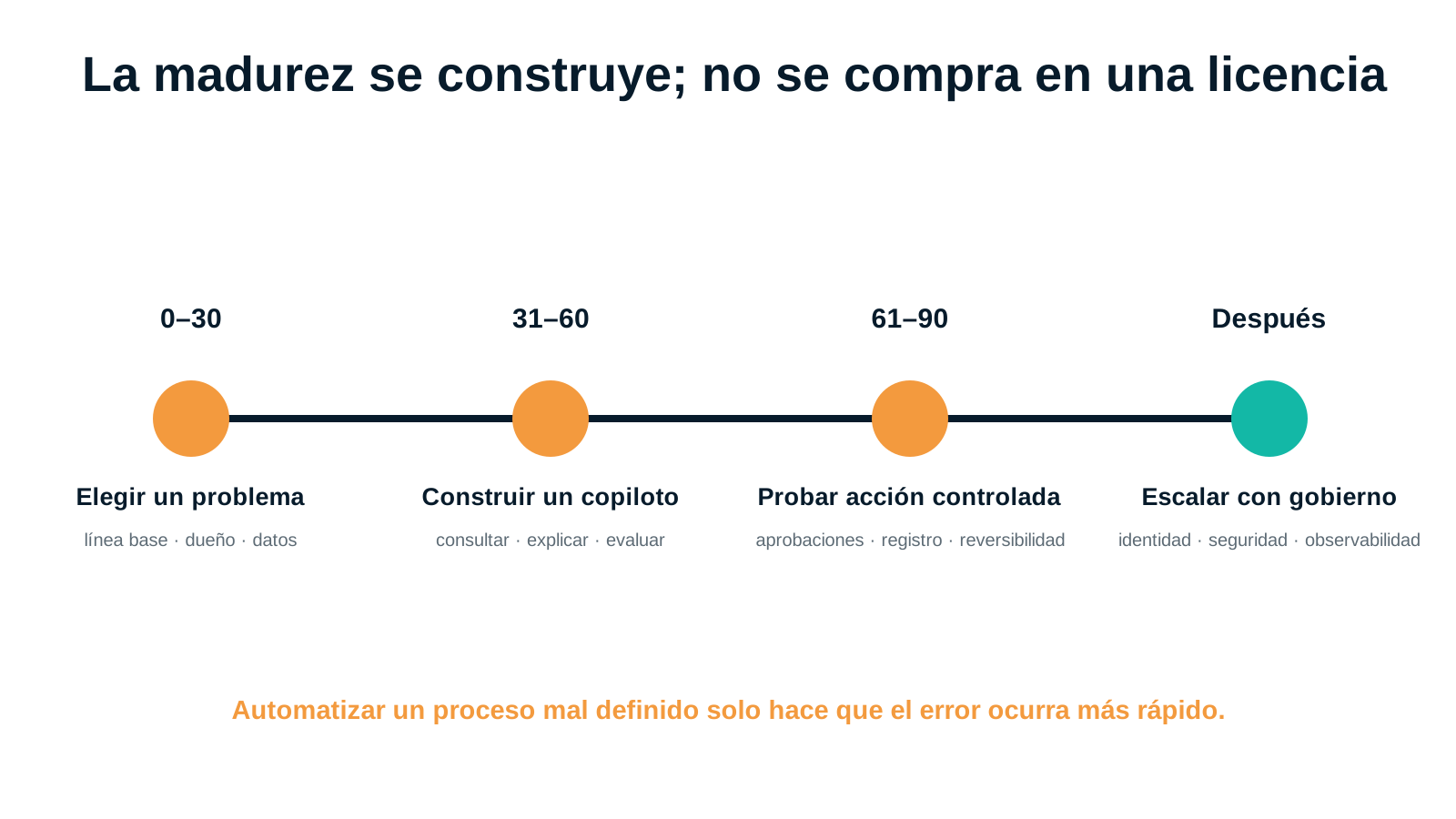
Days 0–30: pick a frequent, costly problem; define an owner, a baseline, the decision, and the data sources.
Days 31–60: build a copilot that queries, explains and recommends; evaluate quality against real cases.
Days 61–90: allow one limited, reversible, approved action; log evidence, errors and outcomes.
After that: scale only once identity, security, observability, data governance and value metrics are in place.
9. Hard questions before you invest
- Is there a frequent, costly or slow problem — or just technological curiosity?
- Can the decision and its exceptions be described?
- Are the data sources and their owners identified?
- Is the level of autonomy proportional to the risk and to reversibility?
- Is there a baseline metric and a before/after comparison?
- Is there an operational owner — not only a technology owner?
Verdict
Appendix
Selected references
Official product sources and corporate documentation consulted as of 29 July 2026: OpenAI Platform and model documentation; Anthropic Claude Platform; Google Cloud Gemini Enterprise Agent Platform; Microsoft Windows agent workspaces and Agent 365; NVIDIA Enterprise AI Factory; SAP Joule Agents and Autonomous Supply Chain; Oracle Fusion Cloud AI Agents.
This document describes capabilities and strategic direction. It does not constitute independent validation of results, nor a purchase recommendation. Model names and release cycles change quickly — treat version names as illustrative, not as the central argument.

Andrey Torres
Founder, Harbour Intel · Builder of STRATEGOS · andreytorres.com